
Proving Grounds is the first playable map built for Voyager’s MVP. Its purpose is not to look finished. Its purpose is to answer the most important question first: is the core combat fun?
The map was designed as a compact 3v3 close-quarters arena, built specifically to test movement, weapon handling, recoil, ADS transitions, shield damage, hitmarkers, respawning, and general match pacing. This aligns with the MVP’s focus on establishing a smooth, familiar FPS foundation before investing time into polish or larger systems.
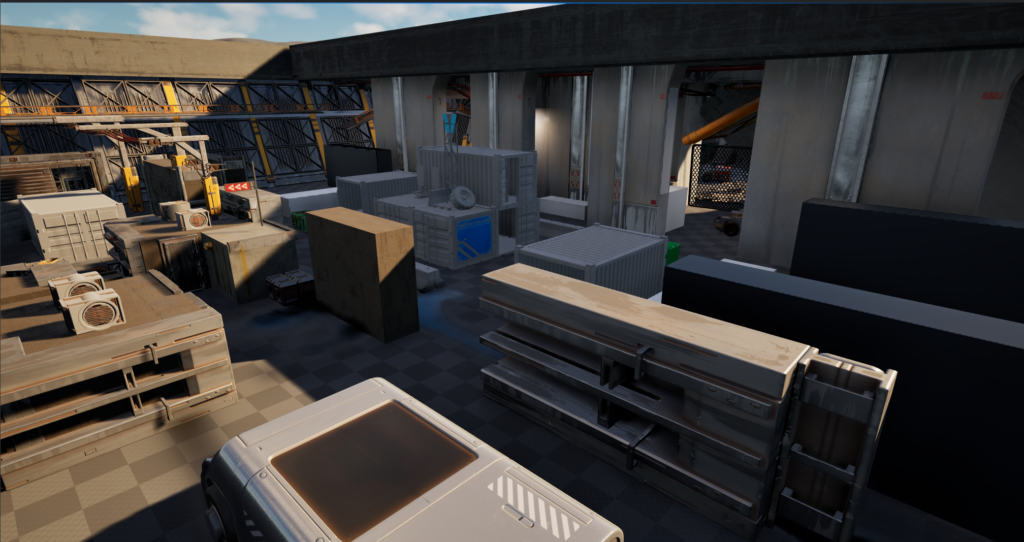
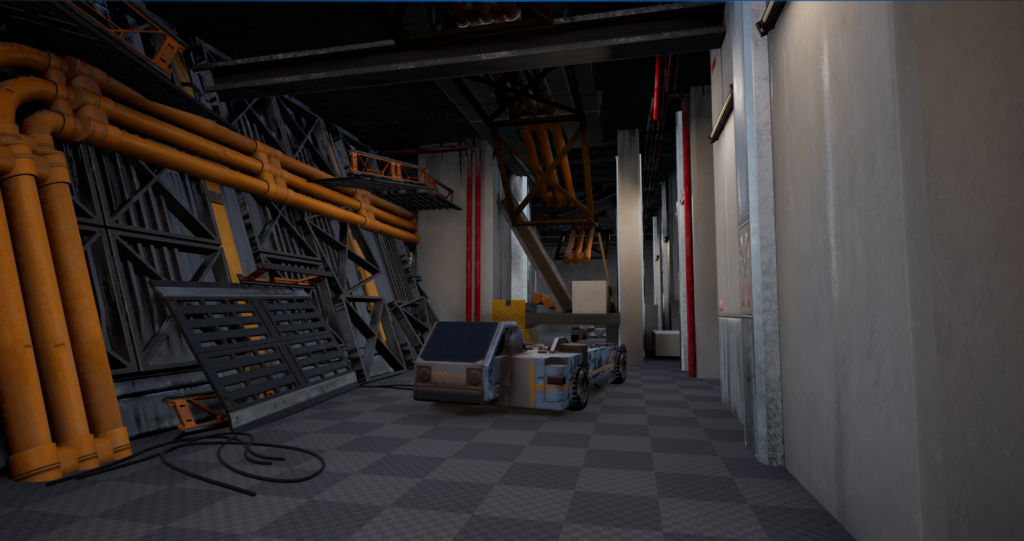
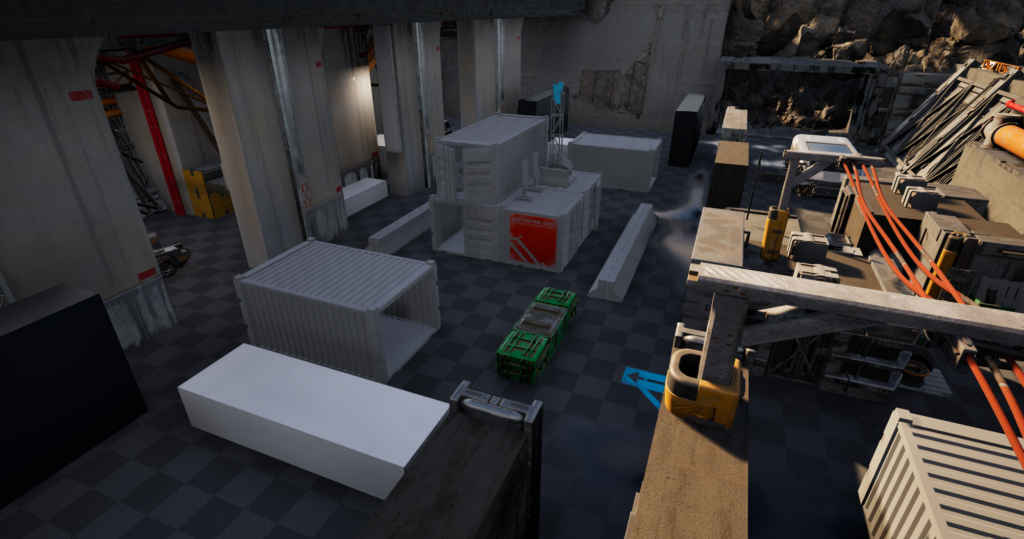
Greybox First
Proving Grounds uses a greybox-first methodology. Every wall, cover piece, lane, and spawn point is represented with simple geometry so that gameplay can be tested without visual assets influencing design decisions.
The layout is divided into three primary combat spaces:
- A tighter northern route built around cover and controlled sightlines
- A central combat lane with several engagement distances
- A more open southern route designed to test sprinting and tactical sprinting
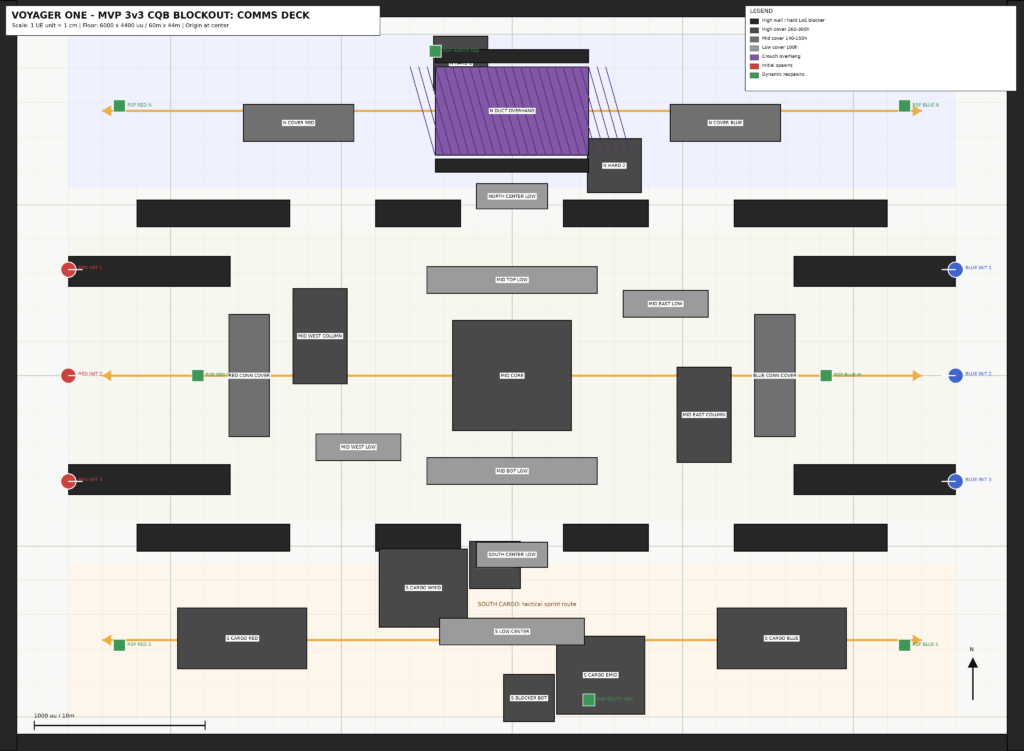
Rather than creating three perfectly straight lanes, the map uses staggered blockers, offset cover, and overlapping routes. This allows players to rotate between areas while preventing uninterrupted spawn-to-spawn sightlines.
Designing Around Player Movement
The map’s dimensions and cover spacing were inspired by Voyager’s movement speeds. Long routes provide room to test sprint and tactical sprint, while shorter combat pockets force players to transition quickly back into weapon-ready movement.
Cover is divided into several functional heights:
- Low cover for crouching and partial protection
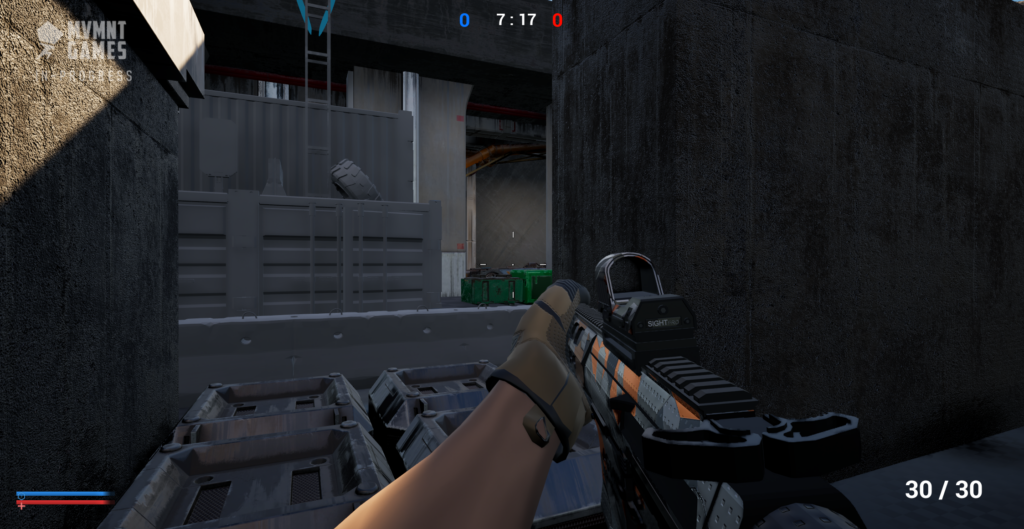
- Mid-height cover for quick peeks and repositioning
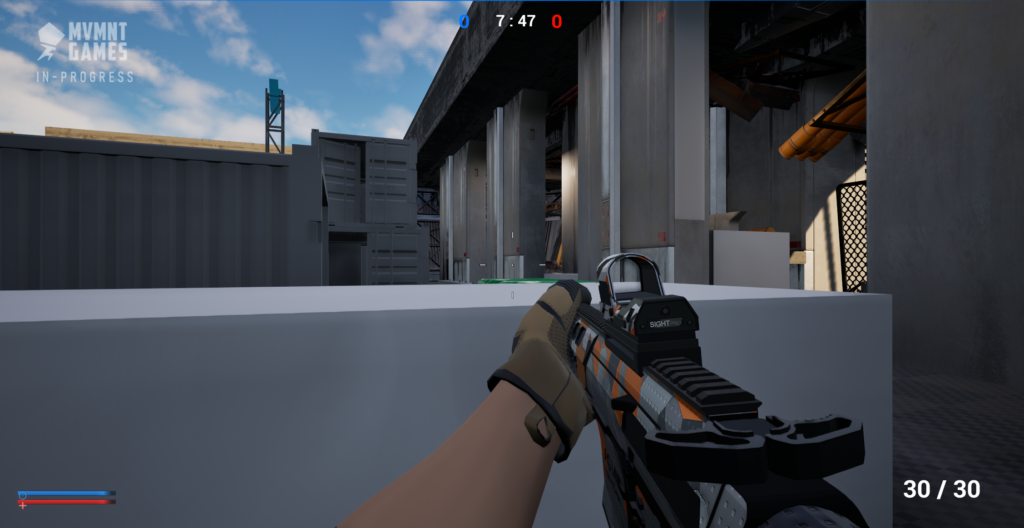
- High cover and hard blockers for breaking sightlines
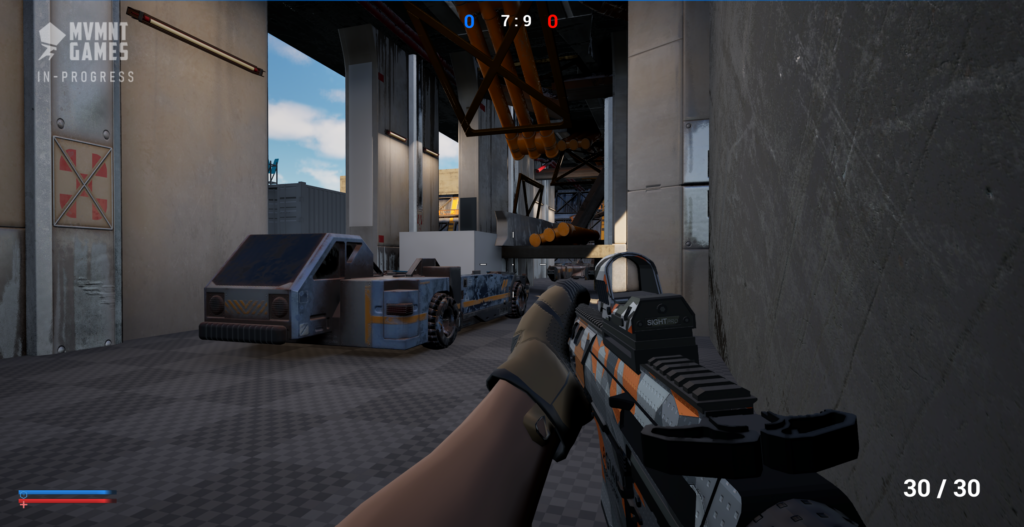
- Overhangs and enclosed spaces for testing tighter combat movement
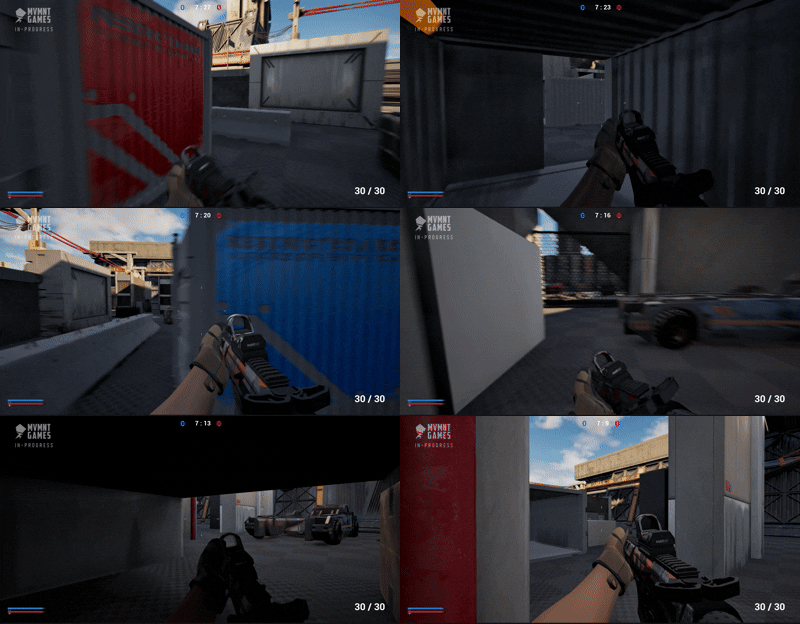
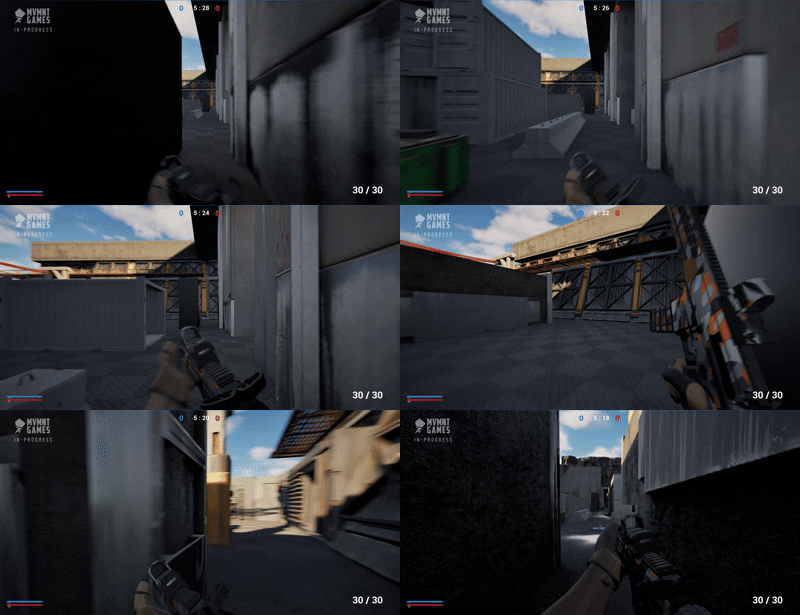
These elements are not decorative. Each one exists to test a specific mechanic or player decision.
Built to Be Changed
The current layout is not considered final. Spawn locations, cover positions, route widths, and sightlines will be adjusted through playtesting.
That iterative approach is central to how MVMNT Games intends to build: create the simplest playable version, release it early, collect feedback, and refine what actually matters to players.
Proving Grounds is not trying to prove that the map is finished.
It is trying to prove that the foundation is worth building on.