
Voyager: Snapshot 01
The first full look inside the current build.
This Voyager development update covers what you can play today, what still needs work, and where the game is heading next.
Voyager is still early in development. However, everything discussed below already works in the game.
That does not mean every feature feels finished. I am still tuning movement, improving animations, balancing weapons, and adding better sound and visual effects.
There is no polished demo hiding behind this post. This is an honest look at a game while I am building it.
What Is Voyager?
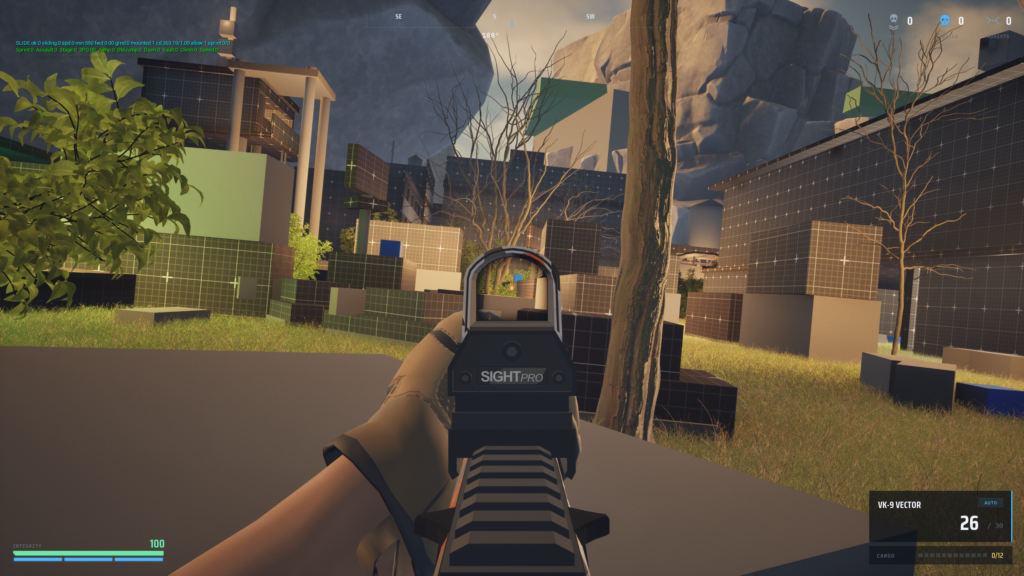
Voyager is a multiplayer first-person shooter built in Unreal Engine 5.
My goal is to create fast and responsive combat that still feels grounded. Movement should have weight. Weapons should feel powerful. Each action should flow smoothly into the next.
Sprinting, sliding, aiming, firing, climbing, and taking cover should feel like parts of one system.
That foundation supports Warfront, the main game mode I am building.
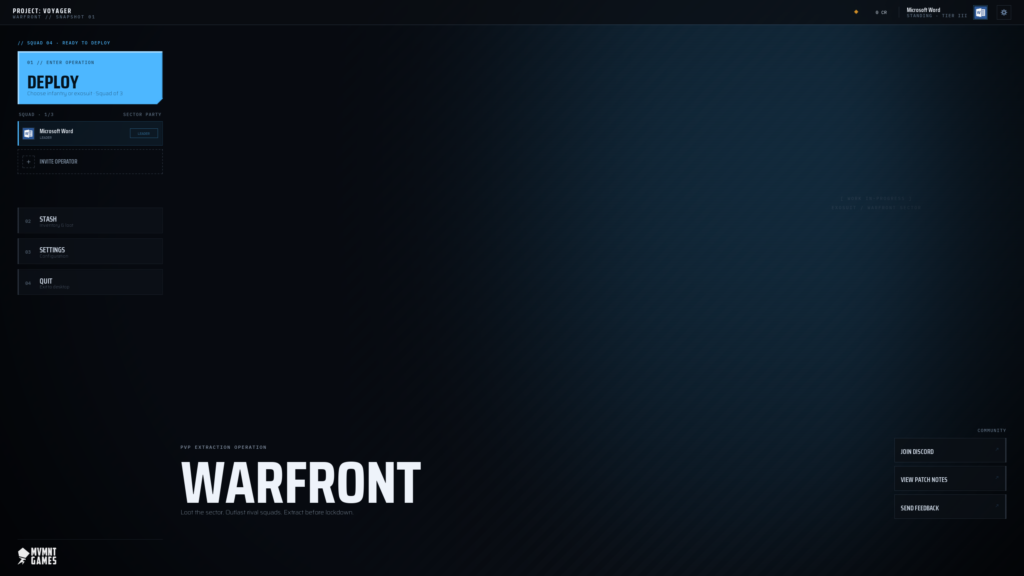
In Warfront, 12 players enter a contested sector as four squads of three. Your two squadmates are the only players you can trust. Everyone else is a threat.
The goal is not to earn the highest score.
Instead, you enter the map, search for valuable salvage, survive the other squads, and reach an extraction point. If you die, another player can take what you found.
Voyager is mainly a solo project. Because of that, I need systems that are easy to adjust and expand. I cannot rebuild the game every time a weapon or movement value needs to change.
Movement Comes First
A shooter can have great weapons and impressive effects. However, none of that matters if moving around feels wrong.
That is why movement became one of my first priorities.
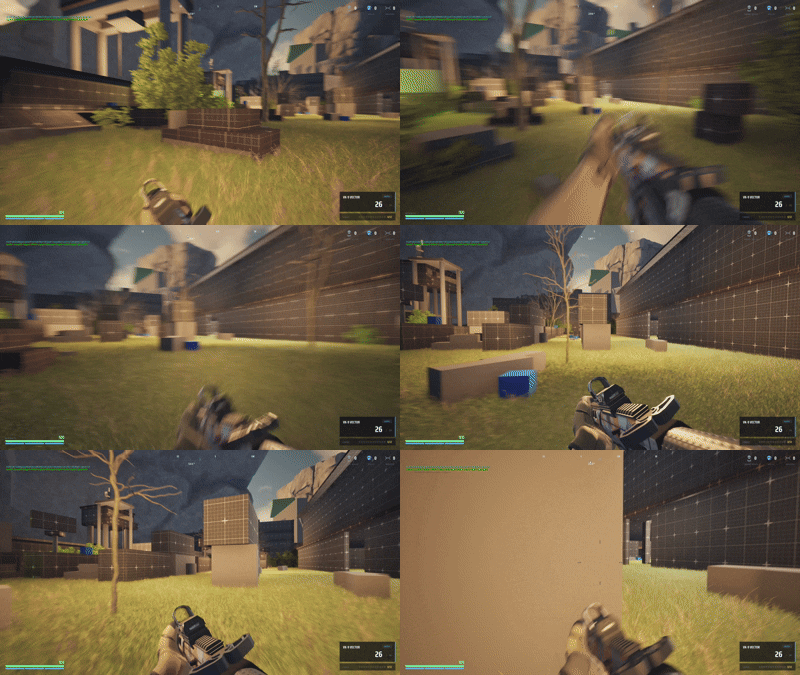
Jumping feels quick and committed. There is no double jump or long, floaty airtime. The player rises quickly and falls faster, which makes each jump feel heavier.
Large drops also have consequences.
A hard landing can damage the player and briefly stop them from sprinting. Instead of landing and instantly running away, the character needs a moment to recover.
Repeated jumping also becomes less useful. Each jump loses height and speed. This helps stop players from bouncing through every gunfight without removing jumping as an option.
Sliding
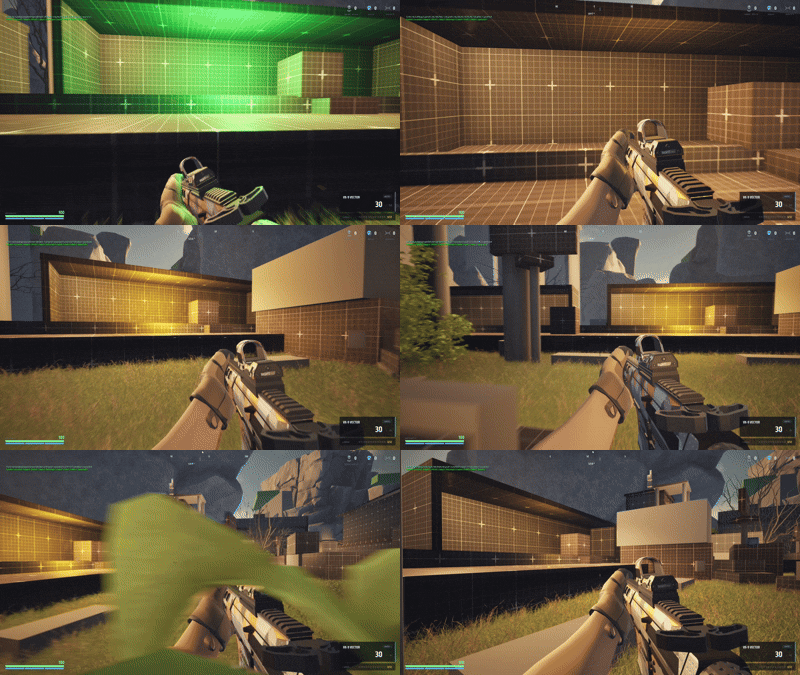
Sliding is one of my favorite movement features in the current build.
When you slide out of a sprint, your current speed carries you forward. That speed then fades instead of stopping at once.
During a slide, you can fire from the hip. You can also jump out of it to carry some speed into your next move.
Aiming down sights ends the slide and brings you back to your feet.
The game also checks whether you have enough speed to slide. If you try again too soon, your character crouches instead.
You have to earn the next slide.
Vaulting and Mantling
The game also reads the obstacle in front of you.
Low fences, rails, and walls trigger a quick vault. Taller objects trigger a mantle, which pulls the player onto the surface.
The goal is to make climbing feel natural. You should not need to stop and think about which move the game expects.
You approach the obstacle, press the button, and the character performs the move that makes sense.
That sounds simple. In practice, thin rails, windows, fences with gaps, and uneven ledges can make detection difficult.
A lot of work goes into making a movement feel effortless.
Weapon Mounting
Weapon mounting is the feature I am most proud of so far.
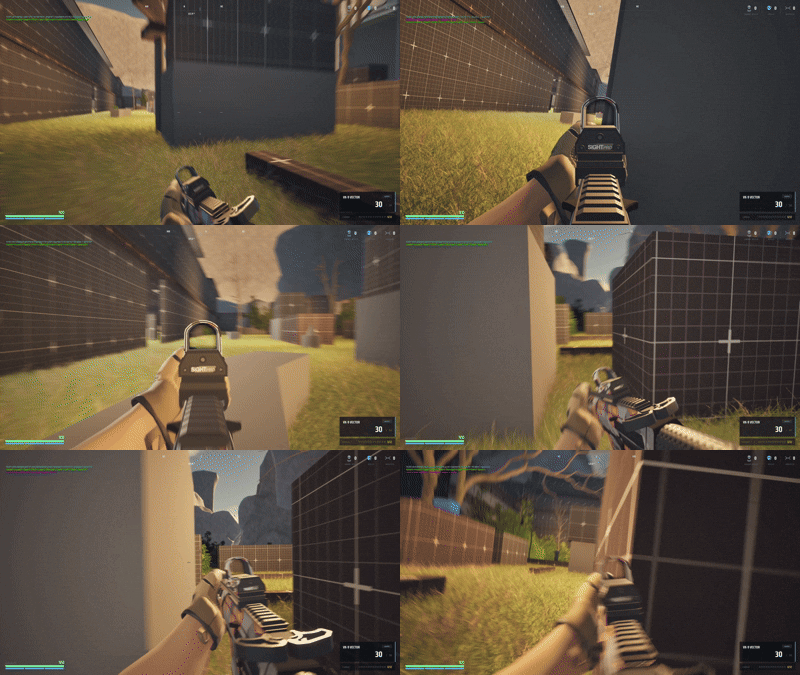
While aiming near a wall, window, or low barrier, you can brace your weapon against the surface. This steadies your aim and lets you lean across the available angle.
You can hold a doorway, watch a narrow path, or fire controlled bursts from behind cover.
This is especially useful in Warfront. Staying alive with valuable loot matters more than chasing every kill.
Mounting gives players a strong defensive option. However, it does not lock them into one position like a fixed turret.
The hard part was keeping the camera, weapon, and sights lined up while the player moved around the cover.
My first attempts focused on attaching the weapon to the wall. That created several problems. The sights moved away from the center of the screen. The weapon separated from the camera. The player’s body also moved in strange ways.
Eventually, I approached the problem from the opposite direction.
Instead of moving the weapon around the player, I move the player around the mounting point. The body follows a small path around the cover while the camera and weapon stay together.
It sounds obvious now.
It was not obvious while I was building it.
I plan to cover the full process in a separate post, including the versions that did not work.
Gunplay
The weapon system lets me adjust each part of a gun separately.
That includes damage, recoil, weapon sway, aiming speed, camera movement, and bullet spread.
As a result, I can change how a weapon feels without rebuilding the whole system.
Aiming down sights uses a smooth transition. The camera zoom, sensitivity, weapon position, and sway all change together.
This avoids the harsh feeling of instantly switching between hip-fire and aiming.
Recoil uses two systems.
The first controls where the player’s view moves while firing. Each weapon can follow its own pattern. Over time, players can learn that pattern and control it.
The second system moves the weapon model itself. This creates the visual punch you expect when firing a gun.
Together, these systems make weapons feel powerful without making every shot random.
Weapons also react when you turn the camera. The gun trails behind your movement for a moment before catching up.
It is a small effect, but it helps the weapon feel like a real object with weight.
The current combat feedback includes:
- A crosshair that expands while moving and firing
- Different hit effects for shields and health
- A clear shield-break effect
- Damage indicators that show where shots came from
- Camera and weapon recoil
- Hit reactions and flinch
- Different damage based on range and body part
Right now, players have 100 health and a 100-point shield.
With body shots, the current target is about 0.7 seconds to defeat a player. Accurate headshots can lower that to about 0.4 seconds.
I want combat to feel fast and dangerous. However, players should still have enough time to react, move, or reach cover.
Warfront
Warfront is where movement, weapons, survival, and player choice come together.
Extraction
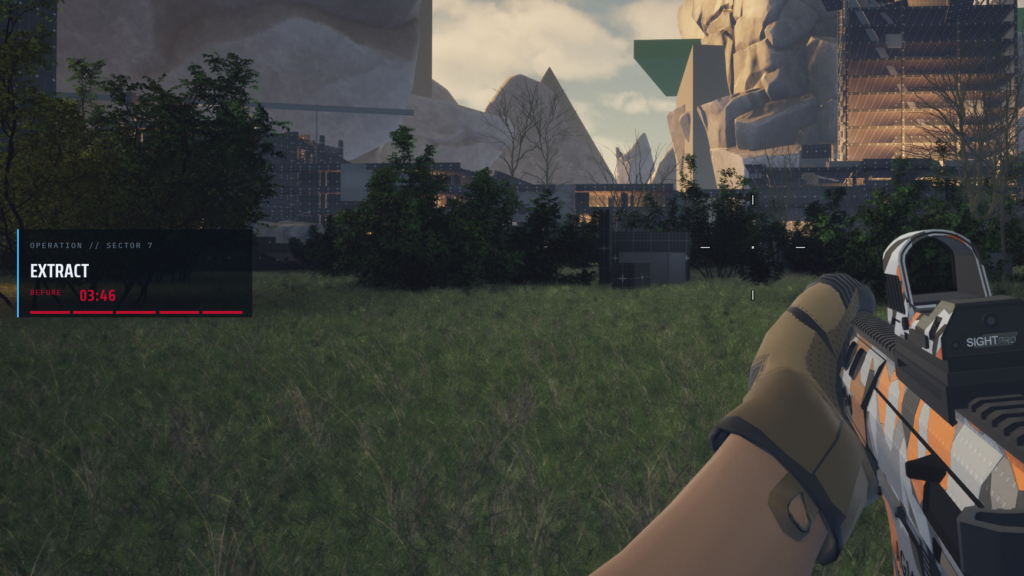
Reaching an extraction point does not let you leave right away.
First, you must call for extraction. Then you need to survive while the pad becomes ready.
Once it opens, you hold the extraction button to leave.
However, the pad does not care which squad you belong to.
When the timer finishes, everyone standing inside the extraction area leaves. That includes enemies.
This can create some interesting moments.
A contested extraction may turn into a final gunfight. It may become a tense standoff. In rare cases, both sides may decide that escaping is more important than fighting.
Loot Has Weight
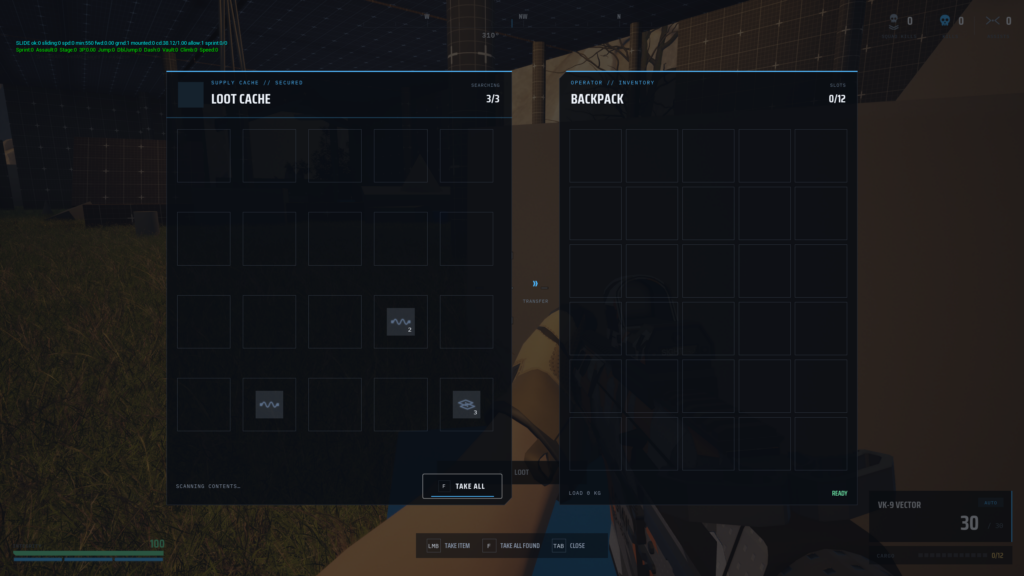
Players find salvage inside containers across the map.
Opening a container does not reveal every item at once. Each section takes time to search.
The longer you stay in the menu, the longer you remain exposed.
Loot also adds weight to your character.
At first, a small amount of salvage has little effect. As your bag gets heavier, movement becomes slower.
If you carry too much, you lose the ability to sprint.
This creates a simple choice.
Do you leave with what you have, or risk becoming slower to carry more?
If you die, your salvage drops into a cache. Other players can search it and take what you found.
If you extract, the salvage moves into your personal stash.
Each player currently has two lives during an operation. Once you lose both, your run is over.
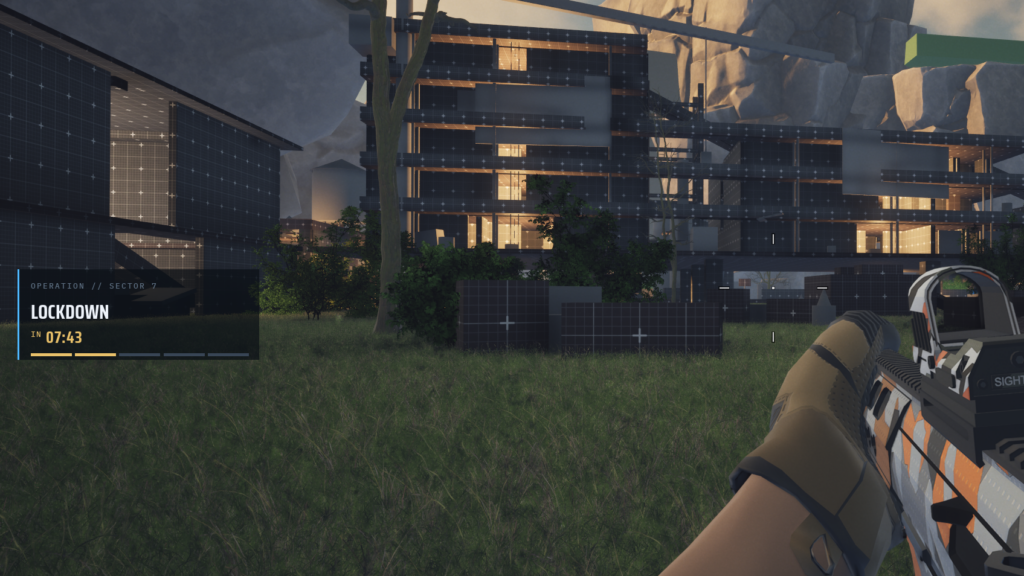
Later in the match, Sector Lockdown begins. Every extraction point closes except one.
Any squads still inside must head toward the same final exit.

The Conflict Director
The Conflict Director may become one of the most important parts of Warfront.
It watches the match and looks for moments when players stop moving or fighting.
When that happens, it can offer new reasons to take action.
For example, an Interception Contract may point a nearby squad toward the players carrying the most valuable salvage.
A Bounty may mark a powerful squad as a target for everyone else.
Most importantly, the Director does not cheat.
It does not increase enemy damage. It does not remove your loot. It does not change your health or decide whether you can extract.
Instead, it gives players information and opportunities.
The system creates pressure, but players still choose how to respond.
You can chase the contract, avoid it, use it as a distraction, or prepare an ambush.
That freedom is the whole point.
Building the World
Warfront takes place across one large sector with several different areas.
These include rail yards, shipping zones, a transit terminal, a damaged research site, a construction area, a central plaza, a reactor complex, tall city buildings, and open ground to the south.
Each area should create a different type of fight.
The outer parts of the map use tighter paths and shorter views. These spaces support close fights, cover, and quick flanks.
The central plaza opens the map. Crossing it leaves players more exposed.
The southern section has longer sightlines and less hard cover. Players must think more carefully about when to move.
The goal is not only to make each area look different.
Each part of the map should change how players approach a fight.
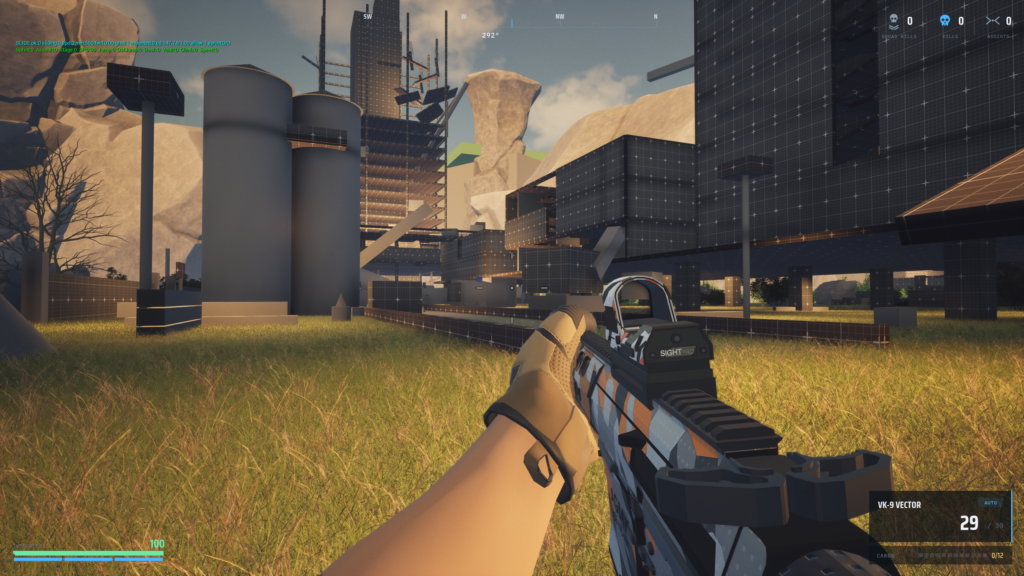
The current lighting uses a golden sunset across the outdoor areas. Inside buildings, warmer rooms sit next to cooler industrial spaces.
A ruined skyline surrounds the sector and makes the world feel much larger than the playable map.
The level is still early. Right now, combat flow and clear paths matter more than final art.
Built for Real Multiplayer
Voyager is not a single-player prototype that may receive multiplayer later.
Multiplayer sits at the center of the project.
The current build includes a dedicated server and an AWS GameLift connection. I have tested the full process of starting a server, connecting players, and spawning them into a match.
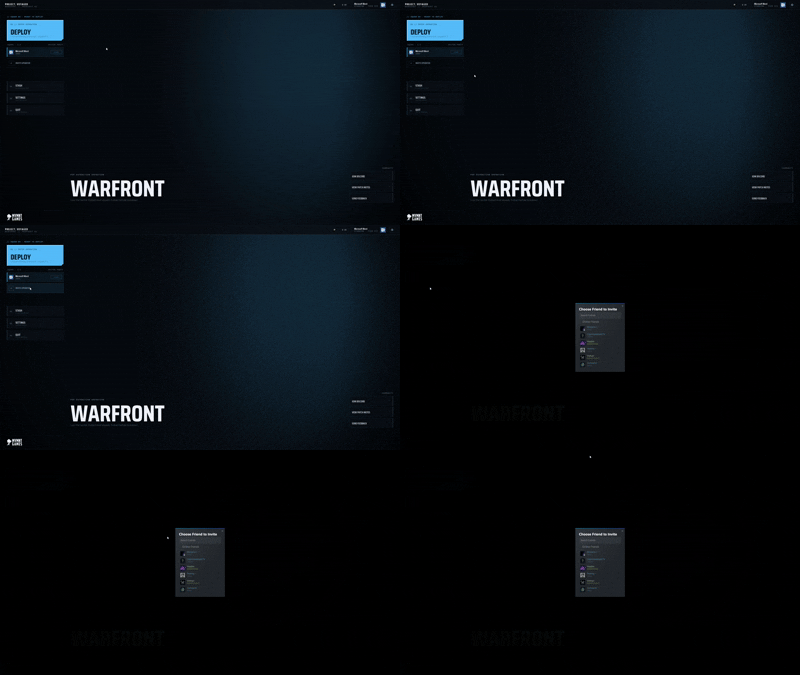
The Steam party system also works.
You can invite a friend, see them join your squad in the menu, ready up, and enter the same match together.
The game also keeps invited players on the same in-game squad.
These features may not look as exciting as sliding or shooting. However, they are essential for a mode like Warfront.
Players need to join matches reliably. Friends need to stay together. Squads need to remain intact after loading into the map.
Smaller details are also coming together.
For example, footsteps now change based on the ground beneath the player. Grass, concrete, and compact soil each produce a different sound.
What Comes Next
This Voyager development update shows the foundation of the game, not the finished experience.
My next priorities include:
- Improving movement, mounting, and weapon feel
- Polishing first-person and third-person animations
- Expanding the downed and revive systems
- Building the Apex event and Accord features
- Improving the map beyond its current early form
- Expanding the dedicated-server setup
- Preparing for larger multiplayer tests
I also plan to publish shorter posts that focus on one feature at a time.
The first deep dives will cover:
- Weapon Mounting
Why my first ideas failed and how the current system works. - The Conflict Director
How the game creates reasons for squads to move and fight. - Movement and Gunplay
The choices behind the speed, weight, recoil, and combat feel. - Building the Warfront Sector
How an early greybox becomes a full multiplayer map.
Voyager still has a long way to go.
However, these ideas are no longer sitting inside a design document. They are playable systems inside a real multiplayer build.
Now I need to test them, break them, improve them, and keep sharing the process.
See you in the sector.